Drainage problems are one of the most common—and most misunderstood—landscape issues facing homeowners in Canton. Heavy clay soil, sloped lots, and strong seasonal rainfall combine to create standing water, soggy lawns, erosion, and long-term damage if left uncorrected.
Many Canton homeowners assume drainage issues are unavoidable or simply part of living in North Georgia. In reality, most drainage problems can be corrected with proper landscape planning, grading, and professionally installed drainage systems.
Why Drainage Problems Are So Common in Canton, GA
Canton’s terrain presents unique challenges that make drainage issues especially common:
- Dense red clay soil that drains slowly
- Rolling hills and sloped residential lots
- Sudden heavy rainstorms
- Older neighborhoods with outdated grading
When water has nowhere to go, it collects in low areas, near foundations, or along walkways. Over time, this leads to turf failure, erosion, and potential structural concerns.
Signs Your Property Has a Drainage Problem
Drainage issues often start small and worsen over time. Common warning signs include:
- Standing water after rainfall
- Soft or muddy areas that never dry
- Grass thinning or dying in specific zones
- Mulch washing out of landscape beds
- Soil erosion near slopes or foundations
- Water pooling near patios or walkways
Ignoring these signs can turn a manageable drainage issue into a costly repair.
How Poor Drainage Damages Landscapes and Homes
Poor drainage affects more than just the appearance of a yard. Long-term water issues can cause:
- Root rot in trees and shrubs
- Foundation moisture problems
- Washed-out landscape beds
- Mosquito breeding areas
- Cracked walkways and patios
Correcting drainage early protects both the landscape and the structure of the home.
French Drains: One of the Most Effective Solutions in Canton
French drains are one of the most reliable drainage solutions for Canton properties. They work by collecting excess water and redirecting it away from problem areas.
A properly installed French drain system includes:
- Perforated pipe
- Gravel for water movement
- Fabric to prevent clogging
- Correct slope for gravity-fed flow
When installed correctly, French drains remain hidden while doing their job quietly and efficiently.
Surface Drainage vs. Subsurface Drainage
Not all drainage problems require the same solution. Professional landscapers evaluate whether surface or subsurface drainage—or a combination of both—is needed.
Surface drainage helps redirect water flowing across the yard.
Subsurface drainage handles water trapped below the surface.
The right solution depends on soil conditions, slope, and water flow patterns specific to the property.
Grading and Drainage Work Must Go Together
One of the biggest mistakes homeowners make is installing drainage without addressing grading. Even the best drainage system will fail if water is not directed properly.
Professional grading:
- Moves water away from foundations
- Reduces erosion
- Supports healthy turf growth
- Improves overall landscape performance
In Canton, grading and drainage should always be planned together.
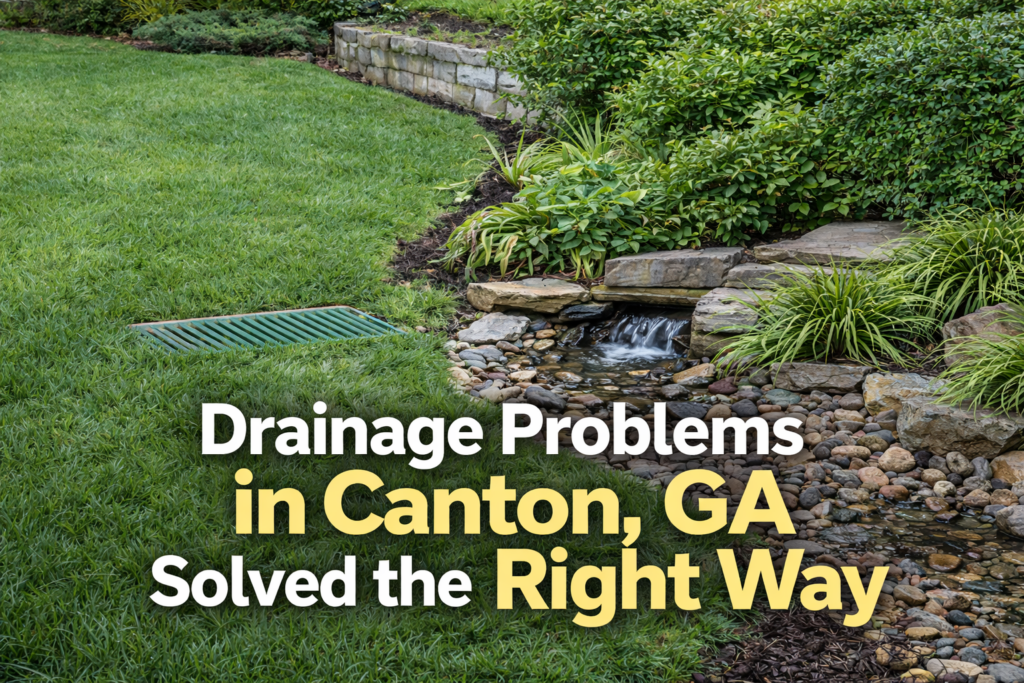
Drainage Solutions That Blend Into the Landscape
Modern drainage systems are designed to function without hurting curb appeal. Drainage work can be integrated into landscape design so it remains nearly invisible once complete.
This includes:
- Hidden drain outlets
- Rock-lined swales
- Discreet catch basins
- Landscaped slopes
Function and appearance should always work together.
Why Professional Drainage Installation Matters
Drainage is not a DIY project for most properties. Improper installation often leads to clogged systems, continued pooling, or new problems elsewhere in the yard.
Professional installation ensures:
- Correct slope and placement
- Long-term performance
- Protection of existing landscape features
- Compliance with local drainage standards
Serving Canton and Surrounding Areas
Complete Horticulture & Tree Service provides drainage solutions throughout Canton, Woodstock, Holly Springs, Ball Ground, Alpharetta, and surrounding North Georgia communities.
Frequently Asked Questions About Drainage Problems in Canton, GA
Why do so many homes in Canton, GA have drainage problems?
Canton has heavy red clay soil that drains slowly, combined with sloped lots and periods of intense rainfall. These conditions cause water to collect in low areas, leading to standing water, erosion, and turf damage if not properly managed.
What are the most common signs of a drainage issue?
Common signs include standing water after rain, soggy or muddy areas that never dry, thinning grass, mulch washing out of beds, erosion near slopes, and water pooling near foundations or walkways.
Can drainage problems damage my home’s foundation?
Yes. Poor drainage can allow water to collect near the foundation, increasing the risk of moisture intrusion, soil movement, and long-term structural concerns if left uncorrected.
Are French drains effective in Canton, GA?
French drains are one of the most effective drainage solutions for Canton properties when properly installed. They redirect excess water away from problem areas and work especially well in clay soil conditions common in North Georgia.
Is drainage something that can be fixed without ruining the landscape?
Yes. Modern drainage systems are designed to blend into the landscape. Drain outlets, swales, and drainage features can be integrated discreetly so they function properly without harming curb appeal.
How do I know if I need grading in addition to drainage?
If water consistently flows toward the home, pools in low areas, or overwhelms existing drains, grading is often required. Proper grading and drainage should work together to move water away efficiently.
Can drainage issues be fixed permanently?
When drainage systems are properly designed and installed based on the property’s slope, soil, and water flow, they provide long-term solutions. Poor installation is the most common reason drainage problems return.
Should I fix drainage problems before installing new landscaping?
Absolutely. Drainage should always be corrected before sod, plants, or hardscape are installed. Otherwise, new landscaping may fail or require costly repairs later.
