
As Canton grows greener and homeowners seek sustainable landscaping solutions, eco-friendly tree removal has emerged as a top priority. Rather than hauling every limb and log to the landfill, modern tree-care companies recycle wood on-site, turning stumps into mulch, logs into firewood, and chips into compost. In this guide, we’ll explore the principles of sustainable tree removal, the innovative recycling methods we use, real-world Canton examples, and tips for choosing a truly green arborist.
What Is Eco-Friendly Tree Removal?
Eco-friendly (or “green”) tree removal goes beyond safe felling, it minimizes waste, protects wildlife habitats, and repurposes as much material as possible. Key characteristics include:- On-site chipping: Large limbs and brush are processed into mulch right where they fall.
- Stump grinding: Stumps become wood chips that nourish soil and suppress weeds.
- Selective salvage: Quality logs are cut for firewood or milled into lumber.
- Composting: Fine chips and sawdust are blended into compost for flower beds and vegetable gardens.
Benefits of Sustainable Practices
Reduced Carbon Footprint
When tree debris is chipped and reused locally instead of trucked to distant landfills, emissions from hauling and methane release from decay are drastically reduced.Habitat Conservation
By leaving wood piles in designated areas, or by creating “habitat logs”, we support ground-dwelling insects, birds, and small mammals that depend on deadwood for shelter.Resource Reuse & Soil Health
Mulch and compost made from wood chips improve moisture retention, soil structure, and nutrient content, reducing the need for chemical fertilizers and irrigation.Wood Recycling Methods
Mulch Production
After grinding or chipping, we screen wood chips to remove debris and deliver uniform mulch, ideal for pathways, playgrounds, and garden beds.Firewood & Specialty Lumber
Salvageable logs are cut into firewood or slabbed for custom woodworking. We partner with local artisans to craft benches, planters, and signage from reclaimed wood.Composting & Soil Amendment
Fine chips and sawdust are blended with green waste in on-site composters. After 3-4 months, the rich compost is available for your vegetable garden or flower border.Our Eco-Friendly Removal Process
1. Assessment & Material Planning
During our certified arborist inspection, we identify:- Wood suitable for salvage vs. chipping
- Stumps prime for grinding vs. full removal
- Nearby habitat features requiring preservation
2. Low-Impact Removal Techniques
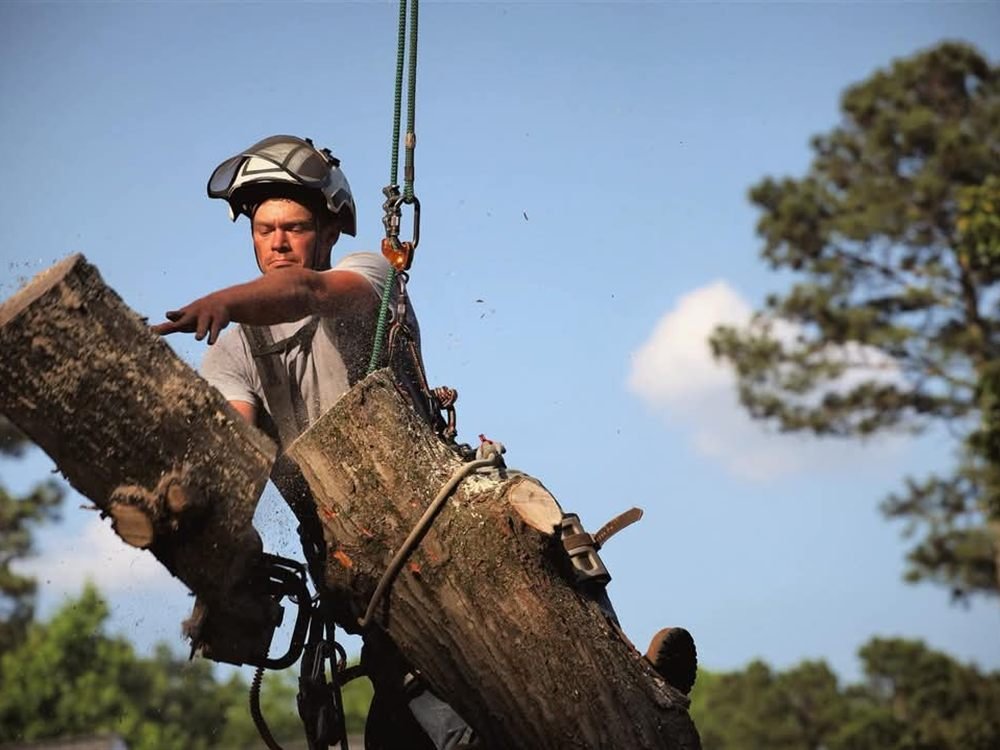
Using sectional dismantling and rope rigging, we minimize disturbance to soil and lawn. Equipment tracks and mats protect turf while allowing chip production close to the stump.3. On-Site Material Reuse
Our chipper and grinder sit on trailers, so nearly all material is processed on-site. We deliver fresh mulch into garden beds, stack firewood neatly, and load compost into wheelbarrows for immediate use.Case Study: Historic Canton Street Project
In Spring 2025, we partnered with a homeowner in Canton’s historic district to remove three diseased magnolias. Rather than truck 5 tons of debris away, we:- Ground each stump into 4 yards of premium mulch for their front garden
- Chipped branches to create a new community compost pile
- Saved logs for a local woodworking class to craft planter boxes
Tips for Homeowners
Selecting a Truly Green Arborist
- Ask about on-site chipping and whether mulch is returned to you.
- Confirm stump grinding depth and whether chips are used in landscaping.
- Inquire if they partner with local artisans or charities for lumber reuse.