
Hardscape
Walkways & patios that stay flat for decades
Pavers, flagstone and natural stone, designed to fit your home and built on a base engineered to survive North Georgia's clay and its freeze-thaw cycles. The surface is what you see; the base is what makes it last.
Quick answer
A paver or stone patio in North Georgia lasts when it's built on the right base, not just laid with the right stone. The surface, pavers, flagstone, natural stone or stepping stones, sets the look, but a deep, compacted aggregate base that drains is what keeps it flat through years of Georgia clay freeze-thaw. Complete Horticulture designs and installs patios and walkways across Canton and North Georgia, and after a free on-site visit you get an itemized written quote for the material and the base that carries it.
What makes a good patio or walkway last?
A patio or walkway is only as good as the base beneath it. The pavers or flagstone you pick set the look, but whether the surface stays flat, level and crack-free for twenty years comes down to excavation depth, compacted aggregate base, and how water is handled underneath. Skip that work to save money up front and the surface heaves, dips and separates within a few seasons.
We design walkways and patios to do two things at once: connect and enliven the property, and hold up to the conditions here. That means the right material for the setting, precise concrete pavers, organic flagstone, or premium natural stone, set on a base built for North Georgia clay, with proper edge restraint and joint treatment so nothing wanders. Where a path or patio is part of a larger vision, it comes out of our landscape design and ties into the full outdoor living space.
What we build
Surfaces for the whole property.
Paver patios
Interlocking concrete pavers, precise, durable and available in patterns and colors to suit any home.
Flagstone patios
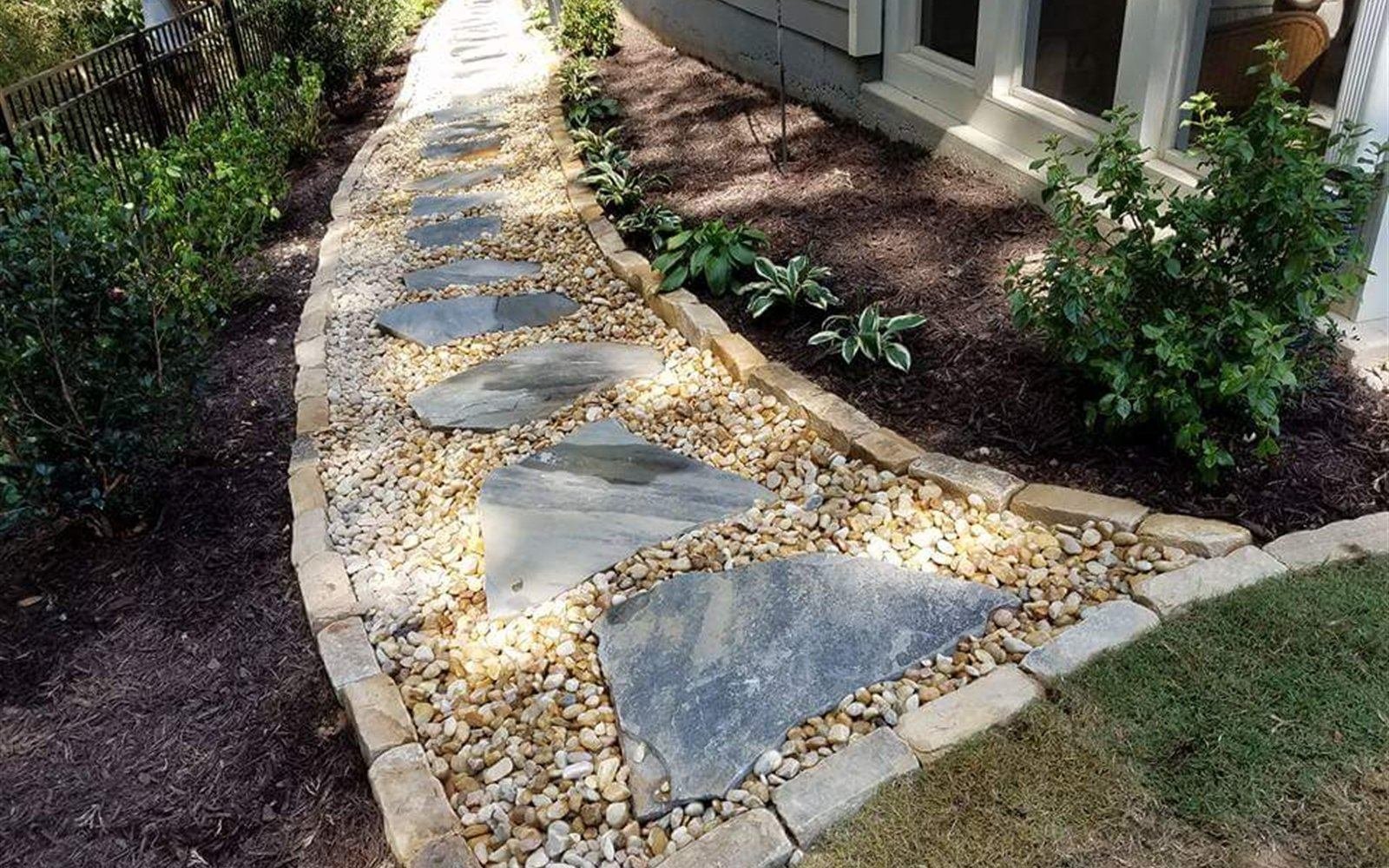
Irregular flagstone for an organic, natural look that settles beautifully into a garden setting.
Natural stone
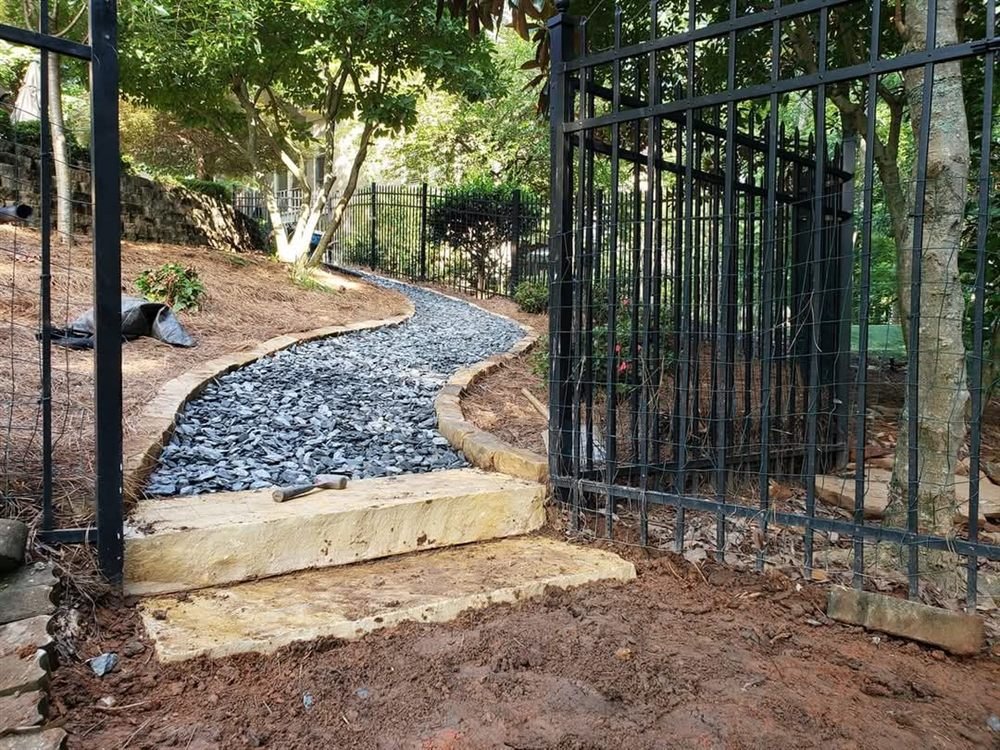
Premium full-stone surfaces, one of a kind, for a truly high-end finish.
Walkways
Front-entry and garden walkways that guide movement and lift a home's curb appeal.
Stepping paths
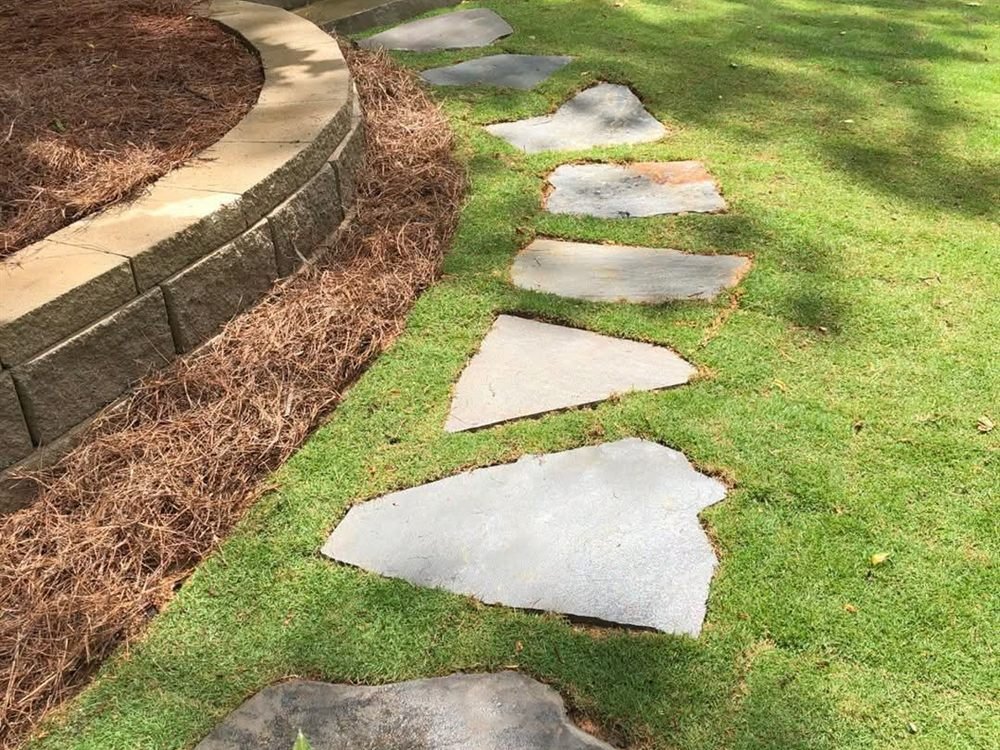
Set stone stepping paths through beds and lawn, a lighter touch that keeps a natural feel.
Base & edge work
The excavation, compaction, edge restraint and jointing that keep the surface flat and tight.
It's all in the base
Clay moves. A patio built for it doesn't.
North Georgia red clay swells when it's wet and shrinks when it dries, and it does that cycle every year. Lay pavers straight on clay, or on a base too thin to matter, and the surface follows the soil, rising, dipping and pulling apart. The fix isn't exotic; it's disciplined. Excavate deep enough, build a proper compacted aggregate base, and get water out from under the surface.
Because we design the plantings and grading around the patio too, water is steered away before it ever becomes a problem, and the beds that frame the surface make it feel like part of the landscape rather than a slab dropped on the yard.
Meet Warren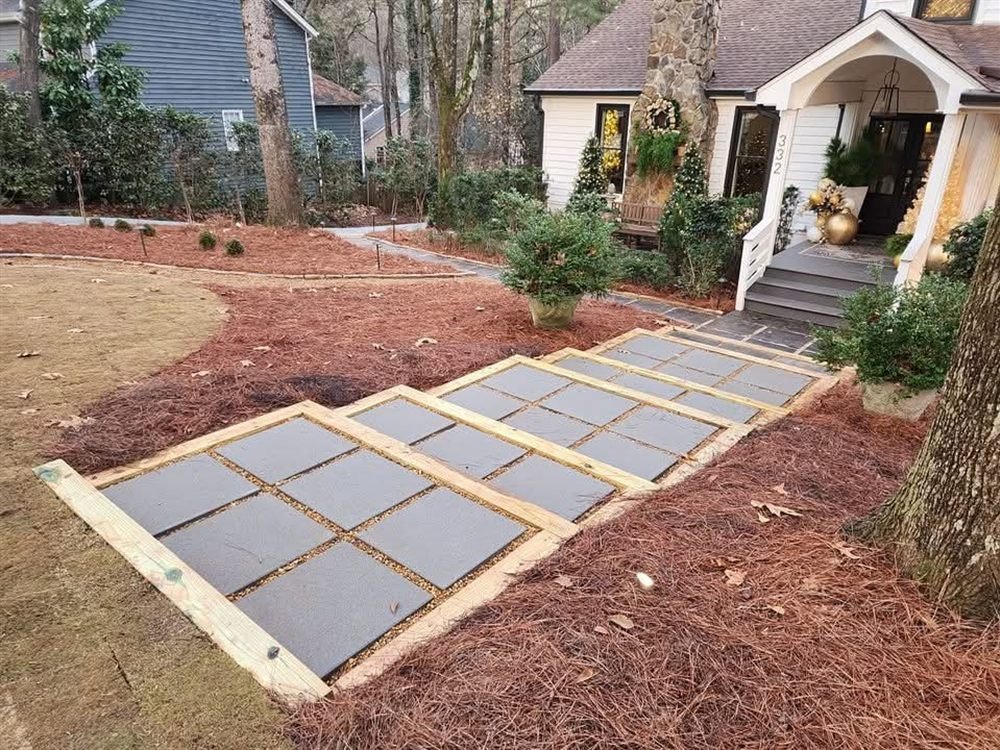
How we build it
Base first, surface last.
Design & layout
A free visit to plan the shape, material and slope, then a written quote.
Excavate & base
Dig to depth and build a compacted aggregate base with the right pitch for drainage.
Set the surface
Lay pavers, flagstone or stone with edge restraint and tight, stabilized joints.
Finish & plant
Frame the surface with beds and restored grade, with immaculate cleanup.
Built for North Georgia
Surfaces built for clay freeze-thaw.
Zone 7b winters aren't brutal, but they cycle above and below freezing again and again, and each cycle moves the wet clay underneath a patio. The difference between a surface that shrugs that off and one that fails is entirely in how it's built.
- Excavation and a compacted aggregate base deep enough for clay movement
- Correct surface pitch so water runs off instead of sitting and freezing
- Edge restraint and stabilized joints that stop pavers from spreading
- Grading and beds that pull runoff away from the surface
Materials
Pavers, flagstone, natural stone or stepping stones?
The right surface depends on the setting, how the space will be used, and your budget. Each of these can look wonderful and last for decades, over the same properly built base. Here's how they compare for a North Georgia patio or path.
Concrete pavers
Pros: precise and modular, a wide range of colors and patterns, individual units flex with clay and can be lifted and reset, excellent value for large areas. Cons: a more manufactured look; colors can date. Best for: larger patios and walkways where cost-per-foot and easy repair matter most.
Flagstone
Pros: irregular, organic character that settles beautifully into a garden; every install is unique. Cons: pricier than pavers, and irregular pieces take more skilled labor to set flat. Best for: garden patios, courtyards and paths where a natural, informal look is the goal.
Natural full stone
Pros: the premium, one-of-a-kind finish; reads as permanent and ages gracefully, ideal for historic settings like Crabapple. Cons: the highest material and labor cost. Best for: feature entries and patios where the finish is the point.
Stepping stones
Pros: the lightest touch and lowest cost; keeps a natural feel and lets lawn or groundcover grow between stones. Cons: a path, not a solid surface, not for dining sets or heavy furniture. Best for: garden routes, cut-throughs and connecting beds without a formal walkway.
The base that survives Georgia clay freeze-thaw
Here's the part that decides everything and that no photo shows: the base. North Georgia red clay swells when wet and shrinks when dry, and Zone 7b winters cycle above and below freezing again and again, every cycle moves the wet clay under a patio. A surface laid straight on clay, or on a base too thin to matter, follows that movement and starts to heave, dip and separate within a few seasons. The fix isn't exotic; it's disciplined: excavate to real depth, build and compact an aggregate base sized for the use, pitch the surface so water runs off, and lock the edges with proper edge restraint and stabilized joints so nothing wanders. Get that right and the same stone that fails on a shortcut base stays flat for decades. When a patio is part of a larger vision it comes out of our landscape design process and ties into the full outdoor living space, with steps and stairways wherever the ground changes grade.
What affects the cost of a patio or walkway?
There's no flat per-foot price, because the base and the site drive as much of the cost as the surface. The same square footage can be a modest walkway or a major patio depending on the material and what's underneath. Here's what we price against:
- Square footage, total area of patio or run of walkway is the starting point.
- Material, pavers are the value pick; flagstone and natural stone cost more in both material and labor; stepping stones are lightest.
- Base & excavation, depth of dig and thickness of compacted base; more for anything that bears weight or sits on poor clay.
- Grade & drainage, a sloped or wet site may need retaining walls, drainage or regrading before the surface goes down.
- Site access & pattern, tight backyards mean more hand labor, and intricate patterns or lots of cutting add time.
Because these vary so much, we don't quote by the square foot sight-unseen. After a free on-site consultation you get a detailed, itemized written quote, surface and base spelled out, so you know exactly what you're paying for.
Selected work
Patios & paths, built.
Walkways & patios FAQ
Questions homeowners ask.
How much does a paver patio cost in North Georgia?
It depends on square footage, the material you choose, and how much base and drainage work the site needs, a straightforward paver walkway sits well below a large natural-stone patio on a sloped, wet lot. We don't quote by the square foot sight-unseen because the base drives so much of the cost. After a free on-site visit you get a detailed written quote with the surface and the base spelled out.
Pavers or poured concrete for a patio?
For most high-end landscapes we favor pavers, flagstone or natural stone over poured concrete. A properly built segmental surface flexes with clay movement instead of cracking, individual units can be lifted and reset if needed, and the look is far richer. Poured concrete cracks on moving clay and is hard to repair invisibly.
How deep does the base really need to be?
Deeper than most shortcuts allow. On North Georgia clay we excavate and build a compacted aggregate base sized to the use and the soil, thicker for patios and anything that bears weight. That base, not the pavers, is what keeps the surface flat through years of freeze-thaw.
Why does my old patio have weeds, dips or shifting pavers?
Those three usually trace back to the same causes: a thin or poorly drained base that let the clay move, missing edge restraint that let pavers spread, and open joints that let weeds and ants in. We rebuild on a proper base with locked edges and stabilized joint material, and steer water away from the surface so it stays tight and level.
Can you match a patio to an existing walkway or home?
Yes. We choose material, color and pattern to complement your home's architecture and any existing stonework, so new and old read as one intentional design rather than a mismatched add-on. Where a path meets a grade change we carry the same material into steps and stairways so the transition looks deliberate.
Do you build patios and walkways in Crabapple and nearby?
Yes. We build across North Georgia and Metro Atlanta, including the Crabapple historic district, Canton, Woodstock, Alpharetta and more. See our full service area.