
Hardscape & grade
Steps & stairways for sloped North Georgia lots
Stone steps, stair treads and timber steps that turn a steep, awkward slope into a safe, graceful climb. Consistent risers, solid footing, and stonework that looks like it belongs, from the front entry to the far corner of the garden.
Quick answer
Outdoor steps and stair treads in Canton, GA are custom-built stairways, natural stone, limestone treads, segmental block or timber, that carry you safely across the grade change on a sloped lot. What makes them safe is consistent geometry: every riser the same height (roughly 6-7 inches for a comfortable outdoor step) on a compacted, drained base so North Georgia clay can't heave them. We design the run, then the same crew sets it.
Why are outdoor steps worth doing right?
Because steps are the one hardscape element you trust with your footing. Outdoor steps solve the most basic problem on a sloped lot: how do you get from one level to another safely and comfortably? On the hills that define North Georgia, that's not a small question. A well-built stairway makes a slope feel accessible and intentional; a poorly built one, uneven risers, loose footing, no drainage, is a trip hazard and an eyesore that only gets worse as the ground shifts.
Good steps come down to two things: geometry and stability. Every riser has to be the same height and every tread deep enough that your foot lands where your body expects it, that consistency is what keeps people from stumbling. And each step has to sit on a stable, drained base so it doesn't heave or wash out. We build stone and timber steps that meet both, and tie them into retaining walls, walkways and the wider outdoor living plan.
What we build
Steps for every grade change.
Natural stone steps
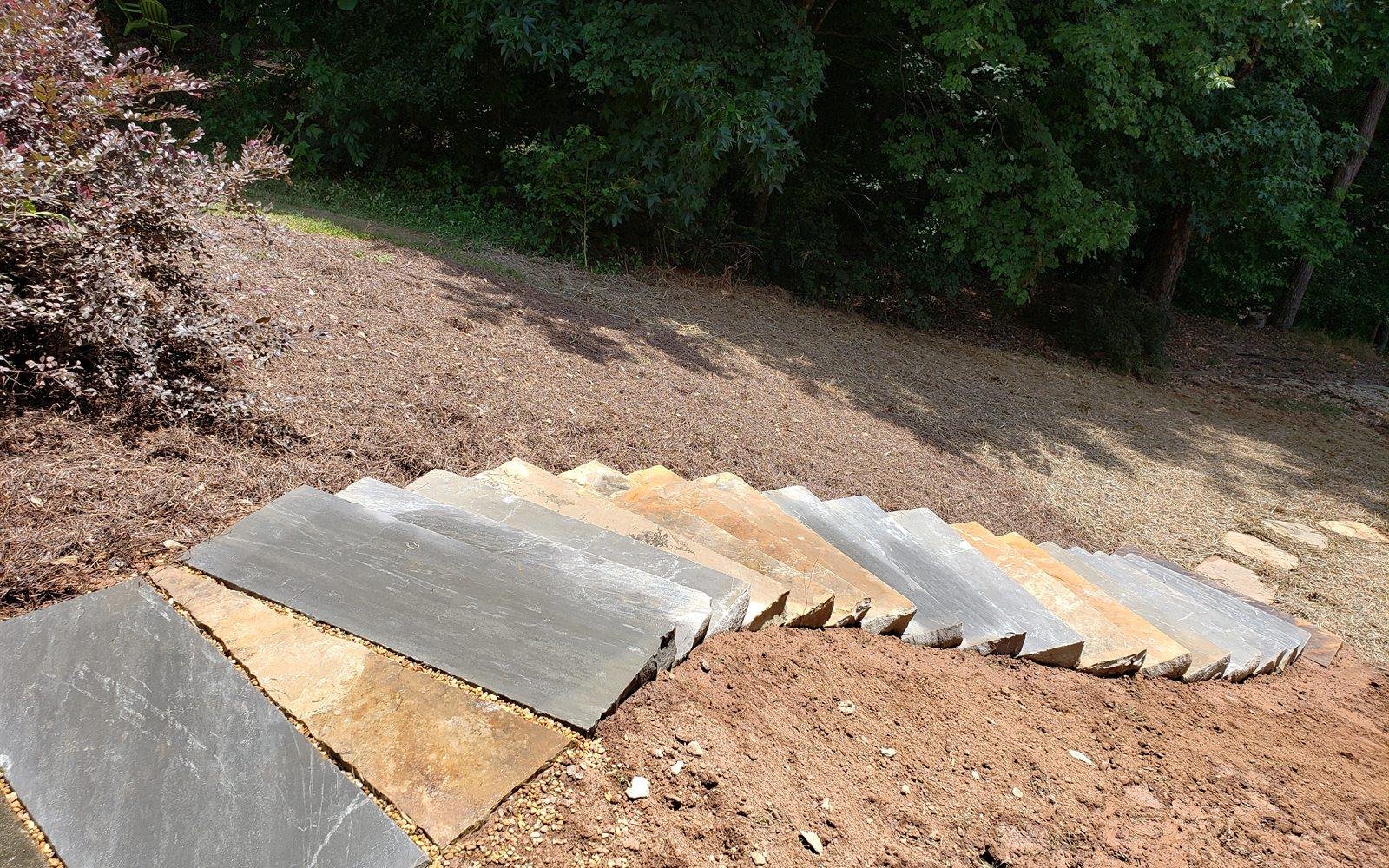
Solid stone slabs set into a slope, durable, timeless, and completely at home in a natural landscape.
Block & paver steps
Segmental block steps that match a paver patio or block wall for a clean, unified hardscape.
Timber steps
Timber-and-gravel steps for garden paths and wooded slopes, rustic, cost-effective and sure-footed.
Entryway steps
Front-entry stairways that lift curb appeal and make the approach to your door feel gracious.
Garden stairways
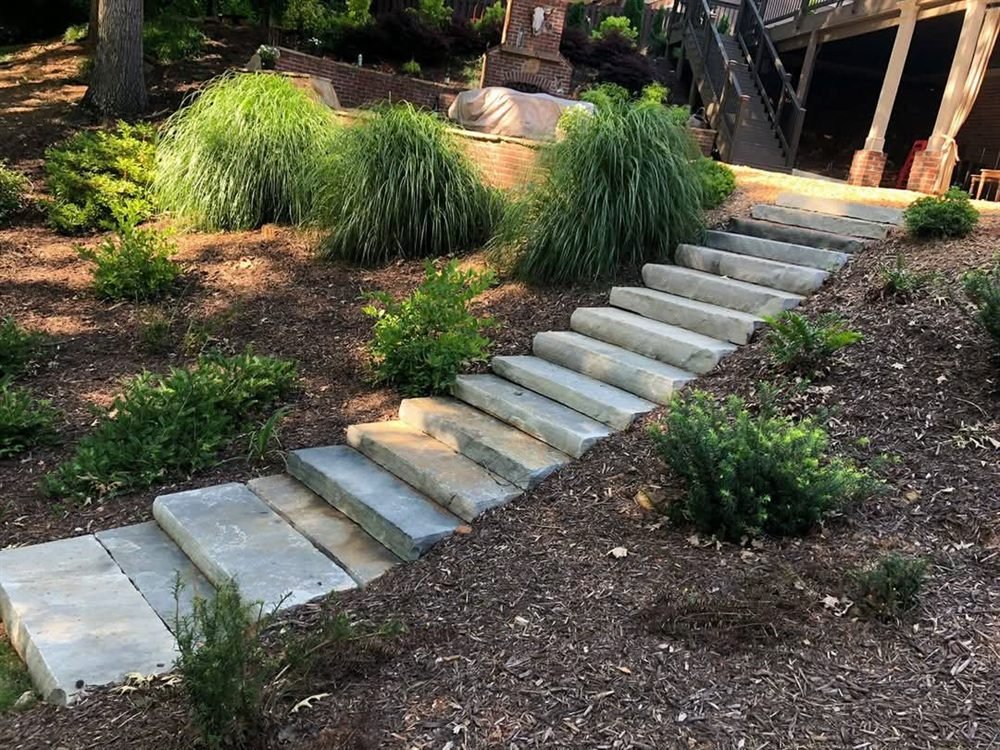
Steps that carry a path through beds and levels, planted to feel like part of the garden.
Steps in walls
Stairways integrated into retaining walls and terraces so grade change and access solve together.
Safety is in the geometry
Consistent risers are what keep people upright.
Your body learns a stairway on the first two steps and then stops looking. If the third riser is an inch taller than the first, that's where the stumble happens. Good outdoor steps hold the same riser height and tread depth the whole way up, the single most important thing a builder can get right, and the one most often botched on sloped lots where it's tempting to just follow the ground.
We set steps on a stable, drained base so they don't heave, and because we're horticulturists, we plant the flanks so the stairway is held together by roots and framed by greenery, safe underfoot and beautiful to climb.
Meet Warren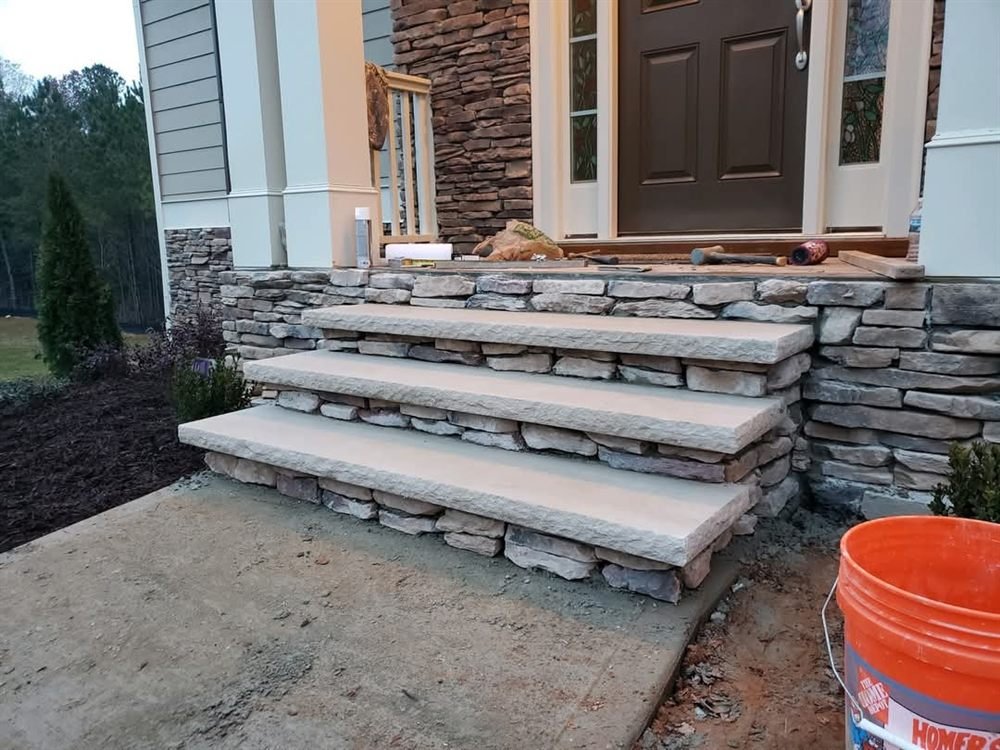
How we build steps
Measured, then set.
Measure the grade
A free visit to measure the total rise and run and calculate consistent, comfortable risers.
Excavate & base
Cut each step and build a compacted, drained base so nothing shifts or washes out.
Set the steps
Place stone, block or timber treads level and true, riser by matching riser.
Plant & light
Frame the stairway with plantings and step lighting so it's safe and inviting after dark.
Built for North Georgia
Sure footing on shifting clay.
The same clay that makes patios heave will lift and tilt a poorly set step. Add wet North Georgia summers and a slope that wants to erode, and outdoor steps have every reason to move. Building them to stay put, and stay safe, takes drainage, a proper base, and plantings that hold the surrounding soil.
- Consistent riser height and tread depth the full length of the run
- Compacted, drained base under every tread so clay can't heave them
- Grading and planting on the flanks to stop erosion beside the steps
- Slip-aware stone selection and optional step lighting for wet, dark evenings
What is the safe rise and run for outdoor steps?
For an outdoor stairway, a comfortable riser is roughly 6 to 7 inches tall paired with a tread that's at least 11-12 inches deep, and, critically, every step in the run holds the same dimension. Landscape steps often run a little lower and deeper than indoor stairs because you're walking them at a stroll, sometimes carrying something, sometimes in the dark or the wet. The rule that keeps people upright is consistency: the residential building code allows only a small variance between the tallest and shortest riser in a flight, and on a sloped lot that discipline is exactly what gets skipped when someone just follows the ground.
Here's how we approach the geometry and code on a North Georgia slope:
- Measure total rise first, we shoot the full vertical drop of the slope, then divide it into equal risers instead of eyeballing step-by-step.
- Match every riser, the tallest and shortest step in a run stay within code tolerance so your stride never gets caught out.
- Deep, slightly pitched treads, enough depth to land a full foot, with a subtle slope so water sheds instead of pooling and freezing.
- Handrails and landings where the run is long or steep, code generally calls for a rail and intermediate landings past a certain number of risers; we flag when your stairway needs them.
- Slip-aware surfaces and step lighting, textured stone and low step lighting for wet, dark North Georgia evenings.
Permit and inspection requirements vary by jurisdiction, a set of front-entry steps is usually straightforward, while steps built into a tall wall or near a structure can trigger review.
Which step material is right for your slope?
The best material depends on the setting, how formal you want the approach to feel, and budget. Natural stone is the premium, permanent choice; timber is the economical, rustic one; block and paver steps split the difference and match existing hardscape. Here's how the main options compare for a North Georgia lot:
- Natural stone steps, solid slab treads set into the slope. The most durable and timeless look, at home in gardens and natural settings. Highest material and labor cost; heavy pieces need access. Effectively permanent once set on a good base.
- Limestone & bluestone treads, dimensional cut treads with clean, straight lines. Refined and formal, ideal for a front entry or a stairway that ties into a patio; the flat, dressed surface is easy to walk. A premium material with a crisper look than rough fieldstone.
- Segmental block & paver steps, modular units that color-match a paver patio or a block retaining wall. Consistent, unified, and mid-range in cost, the natural pick when the steps need to read as part of an existing hardscape.
- Timber steps, pressure-treated timber risers backfilled with gravel or crushed stone. The most economical and the right rustic fit for wooded garden slopes. A finite lifespan compared with stone, but sure-footed and quick to build.
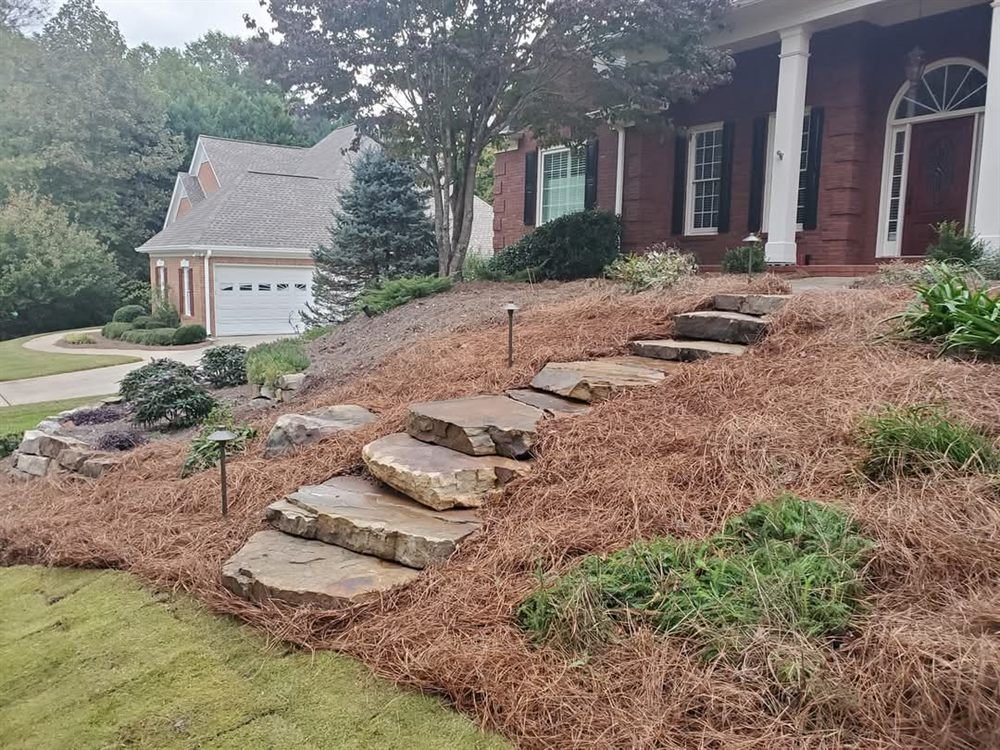
- Boulder & fieldstone steps, irregular natural stone for informal, garden-path climbs. Rugged and beautiful on wooded lots; each piece is placed by eye, so consistency depends entirely on the crew setting them.
Not sure which suits your slope, your budget and the rest of your hardscape? We'll walk it with you as part of a whole-property design or as a stand-alone outdoor-living project.
Selected work
Steps, built.
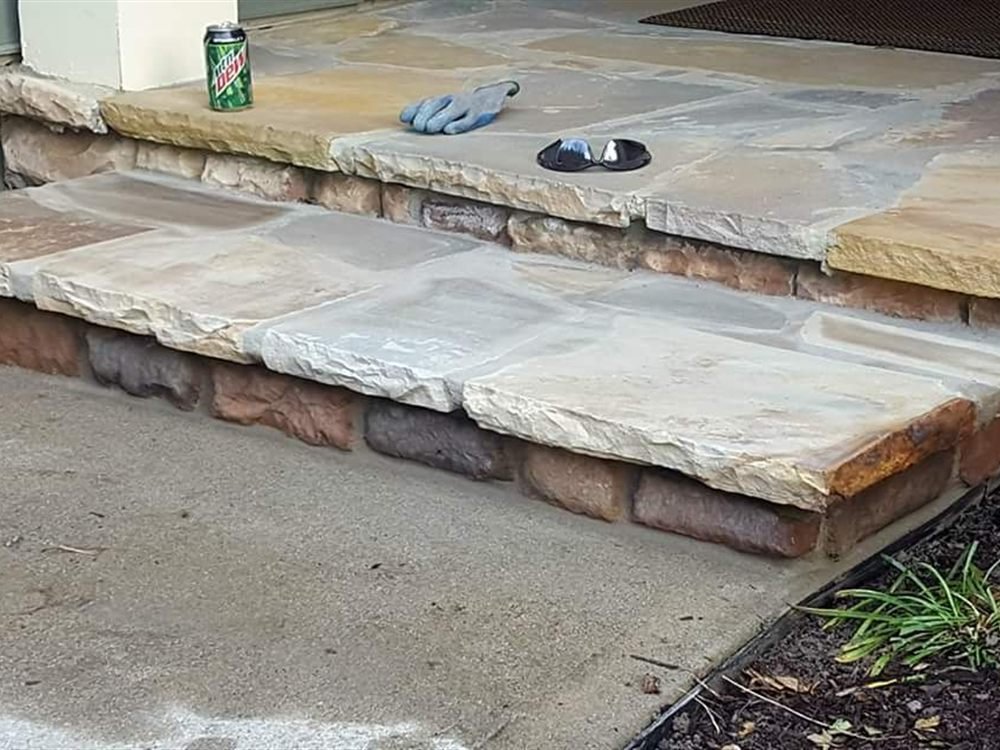
Steps & stairways FAQ
Questions homeowners ask.
Stone or timber steps, which should I choose?
It depends on the setting and budget. Natural stone is the premium, permanent choice and matches formal or front-entry areas beautifully. Timber-and-gravel steps are more economical and suit wooded, informal garden slopes. Block or paver steps are ideal when they need to match an existing patio or wall.
Why do outdoor steps feel awkward to climb?
Almost always inconsistent risers. If step heights vary, your body, which stops looking after the first couple of steps, gets caught off guard. We calculate the total rise and divide it into equal risers with comfortable tread depths so the whole climb feels natural and safe.
Can steps be built into a retaining wall or slope?
Yes, and on steep lots that's often the best solution. Integrating a stairway into a retaining wall or terrace solves grade change and access at the same time, and keeps the hardscape reading as one deliberate design.
Do outdoor steps need a permit or handrail?
It depends on the situation. A short run of garden or entry steps is often straightforward, but code generally requires a handrail once a stairway passes a certain number of risers, and steps tied into a tall wall or close to the house can trigger a permit and inspection. We flag anything that may need approval up front and build to consistent-riser, drained-base standards regardless.
How do you keep steps from heaving or washing out on a slope?
Two things: base and water. We set every tread on a compacted, well-drained base so North Georgia's red clay can't swell and lift it, and we pitch treads and manage runoff so water sheds off the run instead of collecting under it. On steeper lots we grade and plant the flanks, often with a small wall, so the surrounding soil is held in place and erosion doesn't undercut the stairway over time.
Which areas do you build in?
We build across North Georgia and Metro Atlanta, including Canton, Woodstock, Jasper and the wooded mountain lots of Pickens County, Alpharetta and more. See our full service area.