
Site work
Concrete pads & slabs for North Georgia homes
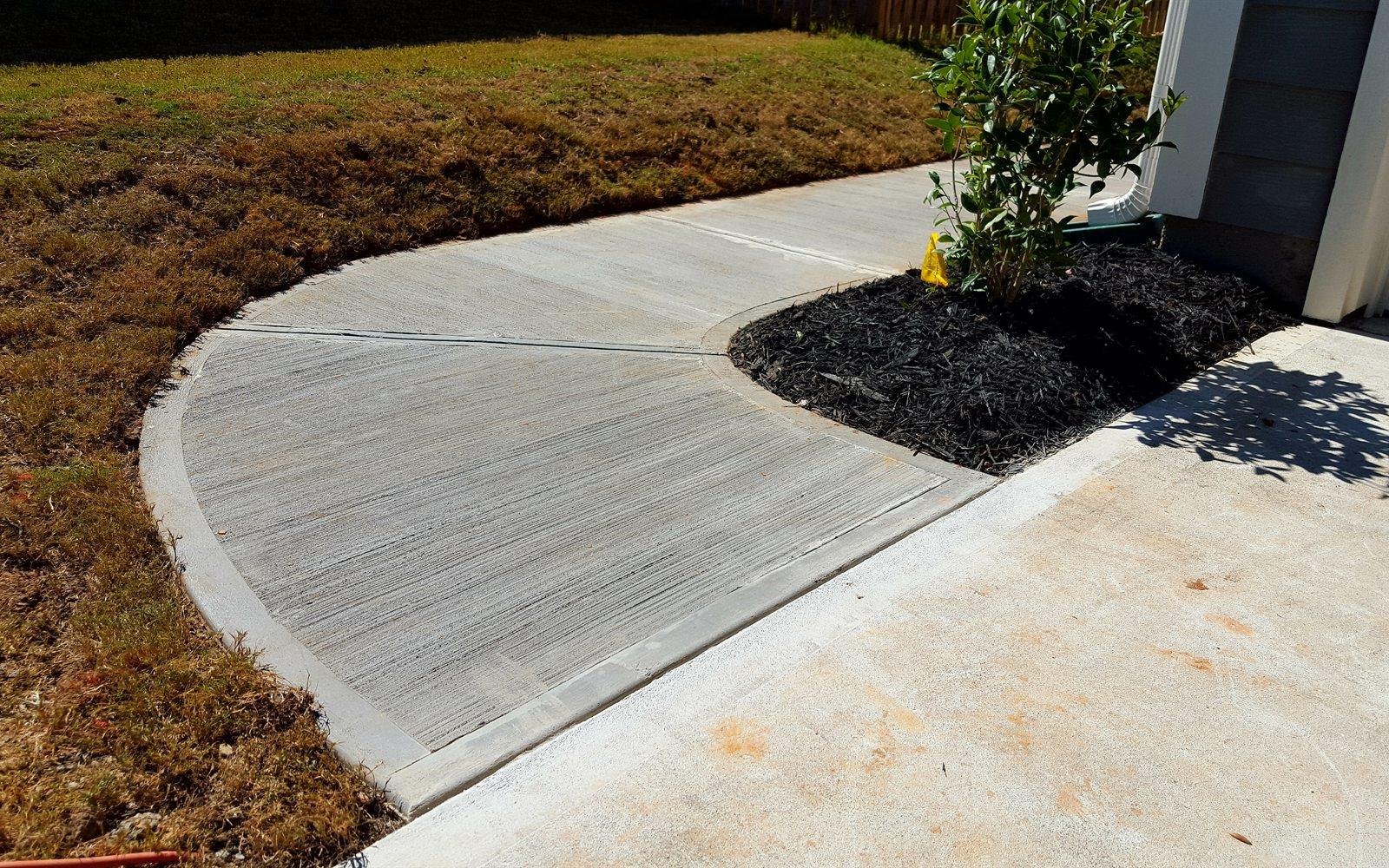
Sometimes you just need a solid, level, permanent surface. AC pads, shed and foundation pads, walkway slabs, poured right, on a base built for our red clay so they don't crack, settle or heave a couple of winters later.
Quick answer
Concrete pads and flatwork in Canton and North Georgia means poured slabs, AC and equipment pads, shed and foundation pads, walkway slabs and driveway extensions, built on a compacted, well-draining base sized for our red clay so they don't crack or heave. We pour clean, straight, functional concrete with a standard broom finish; we don't do stamped or decorative-finish work. A slab is only as good as the base under it, which is exactly the part we get right.
What makes a concrete pad last?
Not the concrete, the base underneath it. A slab is only as good as what it sits on, and in North Georgia what it sits on is red clay: a soil that swells when it's wet and shrinks when it dries, moving enough over the seasons to crack a pad that was poured straight onto the dirt. The pads that stay flat and whole are the ones built on a compacted, well-draining base with the slab thickness and reinforcement matched to the load. When that base needs regrading or a wet spot dealt with first, it ties straight into our grading and drainage work.
That's the practical, unglamorous work we do well. Whether it's a pad for a new AC unit or generator, a level foundation for a shed or outbuilding, a slab walkway or a driveway extension, we prep the ground properly, form it clean, and finish it so it does its job for the long haul. We keep it to straight, functional flatwork with a broom finish, if you're after a decorative patio or a paver walkway that's part of the outdoor living space, that's our patios and walkways and hardscapes work instead.
What we pour
Solid surfaces, done properly.
AC & equipment pads
Level, stable pads for AC condensers, generators and other equipment that needs a firm base.
Shed & foundation pads
Flat, load-appropriate slabs for sheds, outbuildings and small structures.
Walkway slabs
Poured concrete walks and landings that give clean, durable footing between spaces.
Proper base & compaction
A compacted, well-draining base built for red clay, the step that keeps a slab from cracking.
Reinforcement & thickness
Slab thickness and reinforcement matched to what the pad has to carry.
Clean forming & finish
Squared, level forms and a tidy finish, sloped so water runs off instead of ponding.
Why us for the flatwork
The same base discipline as our best hardscapes.
Concrete pads aren't the glamorous end of what we do, but they're built on the same thing that makes our patios and walls last: a properly prepared, well-draining base on ground that likes to move. We spend most of a landscape career fighting red clay, so we know how to prep and grade beneath a slab so water drains away and the pad has firm, stable support.
It also means the flatwork fits the property. A pad we pour drains the right direction, sits at a sensible grade, and screens or plants in cleanly, because we're thinking about the whole yard, not just the square of concrete.
See hardscapes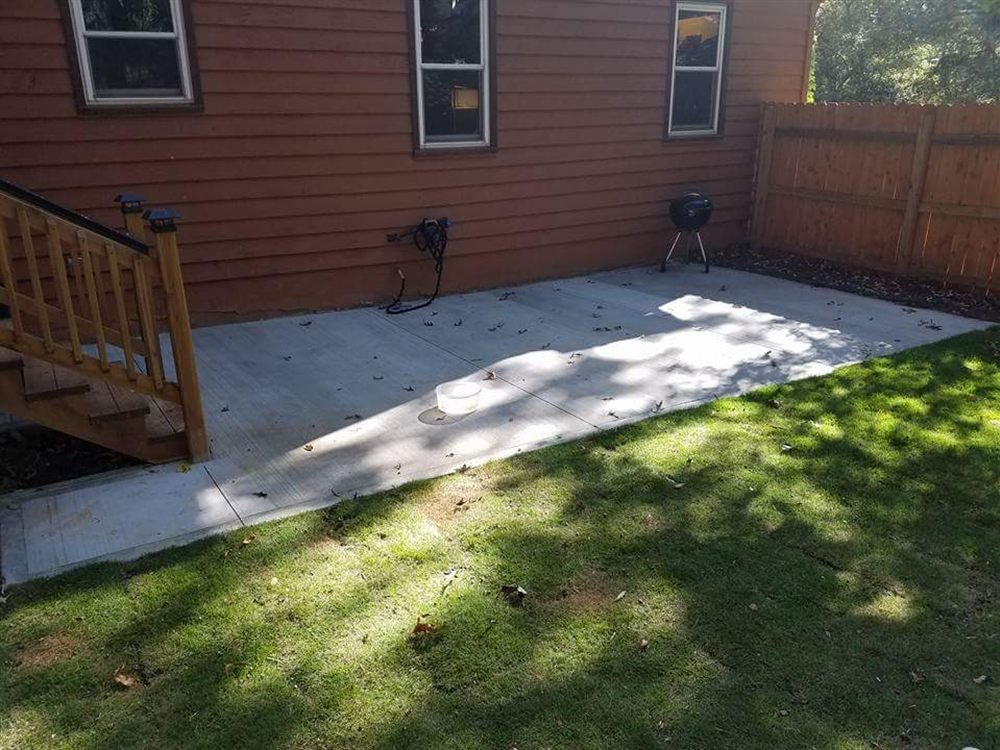
How a pour goes
Prep, form, pour, finish.
Measure & quote
We confirm size, location, load and grade, and give you a clear written quote.
Prep the base
Excavate, build and compact the base, and set squared, level forms.
Pour & finish
Place, reinforce, finish and slope the slab so water sheds cleanly.
Cure & clean up
Let it cure, strip the forms and leave the site clean and restored.
Built for North Georgia
Why do so many pads crack on red clay?
Red clay is why so many pads in North Georgia crack and tilt, it swells wet, shrinks dry, and moves under anything that isn't set on a proper base. We build the base and drainage under a slab to deal with that movement, so the surface stays flat and intact through our wet winters and hot, dry summer stretches.
- A compacted, draining base sized for clay that swells and shrinks
- Grade and slope that move water off the pad, not against the house
- Thickness and reinforcement matched to the load the pad carries
- Clean restoration so the pad fits the surrounding landscape
Selected work
Solid ground.
Concrete or pavers, and what drives the cost?
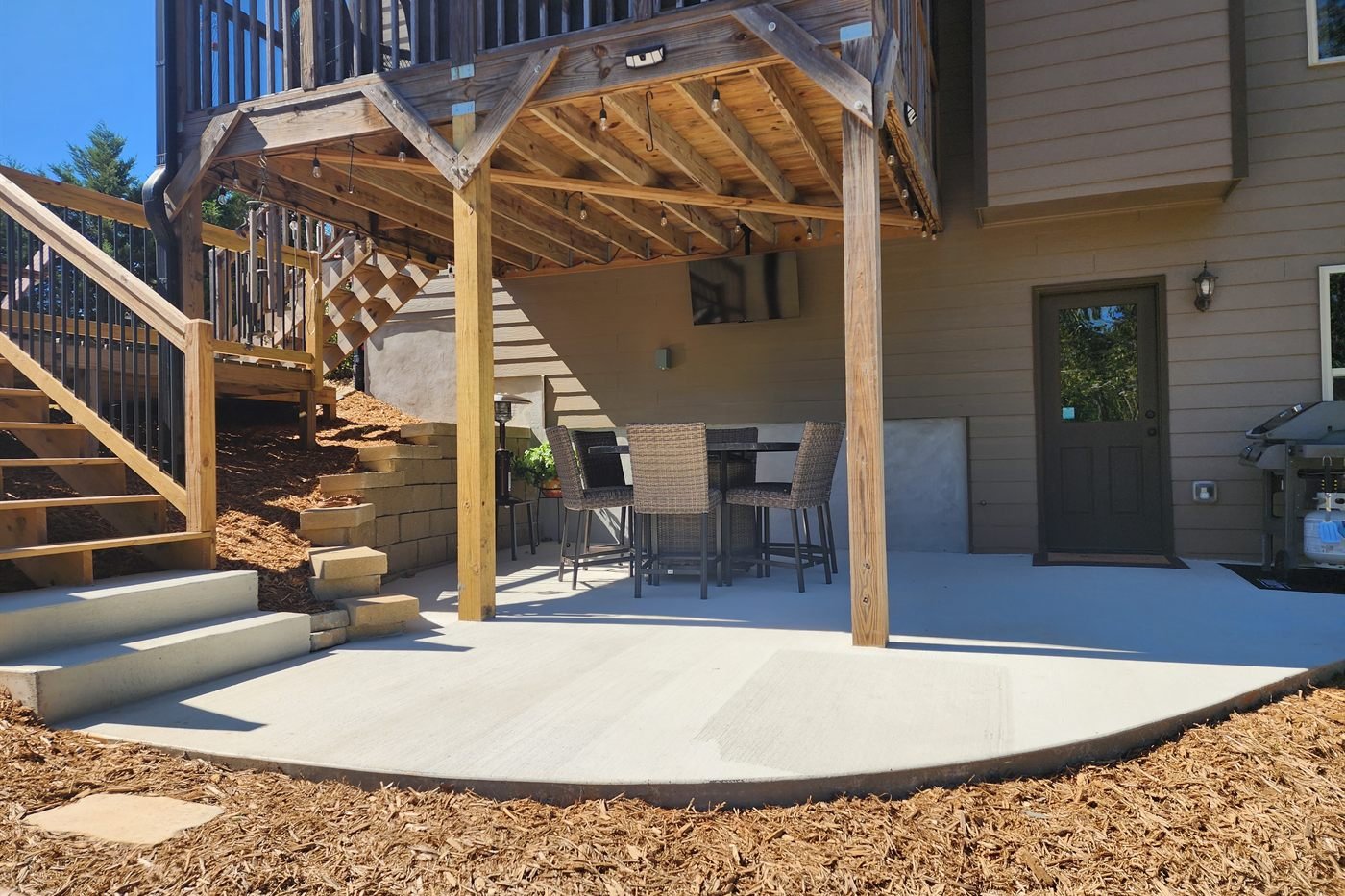
For a functional pad under an AC unit, generator or shed, poured concrete is the simplest, most cost-effective answer, a solid, level, permanent surface. For a patio or walkway that's part of the outdoor living space, pavers usually look better and are easier to repair, and that's a patios and walkways conversation. We pour straight, broom-finished flatwork, not stamped or decorative concrete, so if the finish is the priority we'll point you to the right material honestly. Here's what actually moves the price on a pad:
- Size & thickness, square footage and how thick the slab has to be for the load it carries.
- Base & site prep, how much excavation, fill and compaction the ground needs before a pour.
- Reinforcement, wire mesh or rebar sized to the slab and its use.
- Access, whether a truck can reach the site or the concrete has to be moved by hand.
- Grading & drainage, any regrading or drainage the slab needs so water sheds away from it and the house.
Because those vary so much by lot, we quote after confirming the size, location and grade on site.
Concrete pad FAQ
Questions homeowners ask.
Why do concrete pads crack in North Georgia?
Usually the base, not the concrete. Red clay swells when wet and shrinks when dry, and a slab poured straight onto that ground moves and cracks with it. Building a compacted, well-draining base and matching the slab thickness and reinforcement to the load is what keeps a pad flat and whole.
What kinds of pads do you pour?
The practical ones homeowners need: AC and equipment pads, generator pads, shed and small-structure foundation pads, and walkway slabs and landings. If you need a solid, level, permanent surface, that's the work.
Should I choose a concrete slab or pavers?
It depends on the job. For a functional pad under equipment or a shed, poured concrete is simple and cost-effective. For a patio or walkway that's part of the outdoor living space, pavers usually look better and are easier to repair. We'll give you a straight recommendation for your situation.
Do you do stamped or decorative concrete?
We pour straight, functional flatwork with a standard broom finish, clean, level and durable, rather than stamped or decorative-finish concrete. If you want a decorative surface or a patio that's part of your outdoor living space, pavers and natural stone are usually the better route, and we'll steer you to our patios, walkways and hardscapes work instead.
How long before I can use a new pad?
Fresh concrete sets enough to walk on within about a day, but it keeps curing and gaining strength for weeks. As a rule of thumb, light foot traffic is fine after a couple of days and heavier loads like a vehicle on a driveway extension should wait about a week. We'll give you clear guidance for your specific pour before we leave.
Which areas do you pour concrete in?
We work across North Georgia and Metro Atlanta, including Canton, Woodstock, Alpharetta, Milton and more. See our full service area.